“coffee bean shortage” search results (1000)

Rich flavor, mild taste, Port-au-Prince, Haiti coffee
Most of the coffee produced in Haiti is grown in a purely natural state, which is not intentional but the result of material shortages because coffee farmers are too poor to buy fungicides, insecticides and fertilizers. On the contrary, this makes the coffee produced in Haiti the most natural and pollution-free. Haitian coffee has full granules, rich flavor, medium to low acidity and warm taste.
2016-06-20 Flavor rich taste mild Haiti Prince Coffee production most
Nicaragua Coffee Estate Introduction Nicaragua Coffee Flavor Taste Providence Estate
In many countries coffee production is severely affected for political reasons. The coffee industry in Nicaragua is no exception. The revolution of 1979 forced coffee growers to flee to Miami. A period of uncertainty ensued as the government considered whether to reallocate land (including many plantations), resulting in a shortage of coffee supplies and a decline in production from the early 1970s.
2016-07-27 Nicaragua Coffee Manor Region Introduction Flavor Taste Providence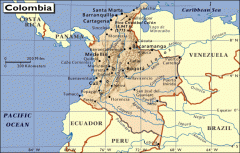
Home-baked boutique coffee (2) Colombia
Although it has been overtaken by Vietnam and Indonesia, it used to dominate the world coffee market. as the first producer of washed bean coffee, second only to neighboring Brazil, Colombia, which ranks second in the world, still stabilizes the world boutique coffee market with its excellent quality. there is no shortage of good beans in the sublime and precipitous Andes. This time the Ming family came to Colombia's boutique beans, in 2007.
2014-09-01 Home-baked boutique coffee Colombia
Introduction to boutique Salvadoran coffee beans Salvadoran coffee beans Characteristics of Salvadoran coffee beans
In the early 1990s, guerrilla warfare significantly disrupted the country's national economy, reducing coffee production from 3.5 million bags in the early 1970s to 2.5 million bags in 1990- 1991. The eastern part of the country was most affected by guerrilla warfare, and many farmers and workers were forced to leave their estates. The shortage of funds has led to a sharp drop in coffee production, from 1200 kilograms per hectare in the past to less than 1,000 kilograms per hectare today.
2016-05-05 Boutique El Salvador Coffee beans Introduction Characteristics Early Years Guerrilla War Terre
Introduction to Nicaraguan Coffee, a Coffee producer in Central America
In many countries, coffee production will be seriously affected for political reasons. Nicaraguan coffee industry is no exception. The 1979 revolution forced coffee planters to flee to Miami. A period of indecision followed, when the government considered whether to redistribute land (including many plantations), which led to a shortage of coffee and a decline in production since the early 1970s
2016-06-18 Central America Central China Coffee producing country Nicaragua introduction
Introduction of Salvadoran coffee price of Salvadoran coffee
In the early 1990s, guerrilla warfare greatly damaged the country's national economy, reducing coffee production from 3.5 million bags in the early 1970s to 2.5 million bags in 1990-1991. The eastern part of the country was most affected by guerrilla warfare, and many farmers and workers were forced to leave the manor. The shortage of funds has led to a sharp drop in coffee production, from 1200 kg per hectare in the past to no yield per hectare today.
2016-05-05 El Salvador coffee flavor introduction price early years guerrilla warfare earth bad
Salvadoran coffee producing areas introduce Salvadoran coffee beans
In the early 1990s, guerrilla warfare greatly damaged the country's national economy, reducing coffee production from 3.5 million bags in the early 1970s to 2.5 million bags in 1990-1991. The eastern part of the country was most affected by guerrilla warfare, and many farmers and workers were forced to leave the manor. The shortage of funds has led to a sharp drop in coffee production, from 1200 kg per hectare in the past to no yield per hectare today.
2016-08-29 El Salvador coffee producing areas introduction coffee beans early 1980s guerrilla warfare land
Boutique coffee Salvadoran coffee origin Salvadoran coffee flavor
Coffee Origin Editor in the early 1990s, guerrilla warfare greatly damaged the country's national economy, reducing coffee production from 3.5 million bags in the early 1970s to 2.5 million bags in 1990-1991. The eastern part of the country was most affected by guerrilla warfare, and many farmers and workers were forced to leave the manor. The shortage of funds has led to a sharp drop in coffee production, from 1200 kg per hectare in the past to today's
2016-05-27 Boutique coffee El Salvador origin flavor editor early decade
Introduction of Nicaraguan Coffee Flavor introduction of Nicaraguan Coffee Manor
In many countries, coffee production will be seriously affected for political reasons. Nicaraguan coffee industry is no exception. The 1979 revolution forced coffee planters to flee to Miami. A period of indecision followed, when the government considered whether to redistribute land (including many plantations), which led to a shortage of coffee and a decline in production since the early 1970s
2016-07-22 Nicaragua coffee flavor taste introduction manor godsend
Nicaraguana Coffee Estate with Moderate Acidity Introduction Tianci Estate Nicaragua Coffee Flavor
In many countries coffee production is severely affected for political reasons. The coffee industry in Nicaragua is no exception. The revolution of 1979 forced coffee growers to flee to Miami. A period of uncertainty ensued as the government considered whether to reallocate land (including many plantations), resulting in coffee shortages and declining yields from the early 1970s.
2016-07-29 acidity medium Nicaragua coffee estate appellation presentation providence flavor
Introduction to the Flavor of El Salvador Himalayan Coffee
In the early 1990s, guerrilla warfare greatly damaged the country's national economy, reducing coffee production from 3.5 million bags in the early 1970s to 2.5 million bags in 1990-1991. The eastern part of the country was most affected by guerrilla warfare, and many farmers and workers were forced to leave the manor. The shortage of funds has led to a sharp drop in coffee production, from 1200 kg per hectare in the past to no yield per hectare today.
2016-10-09 El Salvador Himalayas coffee grinding taste characteristics varieties producing areas boutique
The cost of coffee beans is greatly reduced! Starbucks set a record high price.
The heavy depreciation of the Brazilian lira has made many local coffee farmers who suffer from a shortage of storage space happy to clear their stocks in order to earn a foreign exchange difference when sales are converted from dollars to lira, which has also led to a jump in Brazil's coffee exports, which in turn has reduced Starbucks and Kraft Foods (KraftFoodsGroupInc.) Wait for the cost pressure of the food industry. The share price of Starbucks is not affected at all.
2014-04-27 Coffee beans cost big reduction Buck history high price Brazil lira heavy depreciation local
Salvadoran coffee how much is a jin of coffee beans in El Salvador? Dali
In the early 1990s, guerrilla warfare greatly damaged the country's national economy, reducing coffee production from 3.5 million bags in the early 1970s to 2.5 million bags in 1990-1991. The eastern part of the country was most affected by guerrilla warfare, and many farmers and workers were forced to leave the manor. The shortage of funds has led to a sharp drop in coffee production, from 1200 kg per hectare in the past to no yield per hectare today.
2016-05-04 El Salvador coffee Salva more coffee beans less money one jin Dali age
The flavor of Salvadoran coffee an introduction to Salvadoran coffee
In the early 1990s, guerrilla warfare greatly damaged the country's national economy, reducing coffee production from 3.5 million bags in the early 1970s to 2.5 million bags in 1990-1991. The eastern part of the country was most affected by guerrilla warfare, and many farmers and workers were forced to leave the manor. The shortage of funds has led to a sharp drop in coffee production, from 1200 kg per hectare in the past to no yield per hectare today.
2016-05-06 El Salvador coffee flavor origin introduction early years guerrilla warfare earth bad
Salvadoran coffee with balanced taste and fine texture introduces boutique coffee.
In the early 1990s, guerrilla warfare greatly damaged the country's national economy, reducing coffee production from 3.5 million bags in the early 1970s to 2.5 million bags in 1990-1991. The eastern part of the country was most affected by guerrilla warfare, and many farmers and workers were forced to leave the manor. The shortage of funds has led to a sharp drop in coffee production, from 1200 kg per hectare in the past to no yield per hectare today.
2016-06-28 Taste balance texture fine El Salvador coffee introduction boutique early decade
The origin of Salvadoran coffee. The flavor characteristics of Salvadoran coffee.
In the early 1990s, guerrilla warfare greatly damaged the country's national economy, reducing coffee production from 3.5 million bags in the early 1970s to 2.5 million bags in 1990-1991. The eastern part of the country was most affected by guerrilla warfare, and many farmers and workers were forced to leave the manor. The shortage of funds has led to a sharp drop in coffee production, from 1200 kg per hectare in the past to no yield per hectare today.
2016-05-25 El Salvador coffee origin taste characteristics early era guerrilla warfare earth bad
The Development of El Salvador Coffee quality of El Salvador Coffee
In the early 1990s, guerrilla warfare greatly damaged the country's national economy, reducing coffee production from 3.5 million bags in the early 1970s to 2.5 million bags in 1990-1991. The eastern part of the country was the hardest hit by guerrilla warfare, with many farmers and workers forced to leave the manor. The shortage of funds has led to a sharp drop in coffee production, from 1200 kg per hectare in the past to today's yield per hectare
2016-05-26 El Salvador coffee development course quality early era guerrilla warfare earth bad
Fragrant and delicious Nicaraguan Coffee producing area Flavor introduction of Fine Coffee treatment
In many countries, coffee production will be seriously affected for political reasons. Nicaraguan coffee industry is no exception. The 1979 revolution forced coffee planters to flee to Miami. A period of indecision followed, when the government considered whether to redistribute land (including many plantations), which led to a shortage of coffee and a decline in production since the early 1970s
2016-07-05 Fragrance delicious Nicaragua coffee producing area flavor introduction boutique treatment square
Introduction of boutique coffee in Matagalpa in Central America and Nicaragua
In many countries, coffee production will be seriously affected for political reasons. Nicaraguan coffee industry is no exception. The 1979 revolution forced coffee planters to flee to Miami. A period of indecision followed, when the government considered whether to redistribute land (including many plantations), which led to a shortage of coffee and a decline in production since the early 1970s
2016-07-04 Central America Nicaragua coffee producing country producing area introduction Mataga Erpa boutique
An introduction to the Cultural Origin of Salvadoran Coffee
In the early 1990s, guerrilla warfare greatly damaged the country's national economy, reducing coffee production from 3.5 million bags in the early 1970s to 2.5 million bags in 1990-1991. The eastern part of the country was the hardest hit by guerrilla warfare, with many farmers and workers forced to leave the manor. The shortage of funds has led to a sharp drop in coffee production, from 1200 kg per hectare in the past to today's yield per hectare
2016-06-03 El Salvador coffee culture origin characteristics introduction early years guerrilla warfare